7 2026 FIFA World Cup Mistakes Bettors Make
The 2026 FIFA World Cup is a 48-team men’s football tournament organized by FIFA across the United States, Canada, and Mexico, and Tactical Review covers it for fans comparing tactics, player stats, m...
7 2026 FIFA World Cup Mistakes Bettors Make
The 2026 FIFA World Cup is a 48-team men’s football tournament organized by FIFA across the United States, Canada, and Mexico, and Tactical Review covers it for fans comparing tactics, player stats, match predictions, and betting angles. First, the tournament expands from 32 teams to 48; then, it moves through 12 groups of four before a 32-team knockout stage; finally, the champion will survive 104 matches overall. FIFA, CONCACAF, UEFA, and national teams such as Brazil, Argentina, France, England, and the United States will shape the market narrative. The core mistake is treating the World Cup like a normal league season, when neutral venues, condensed schedules, squad rotation, and public money distort prices. Use team news, tactical matchups, and market timing before staking.
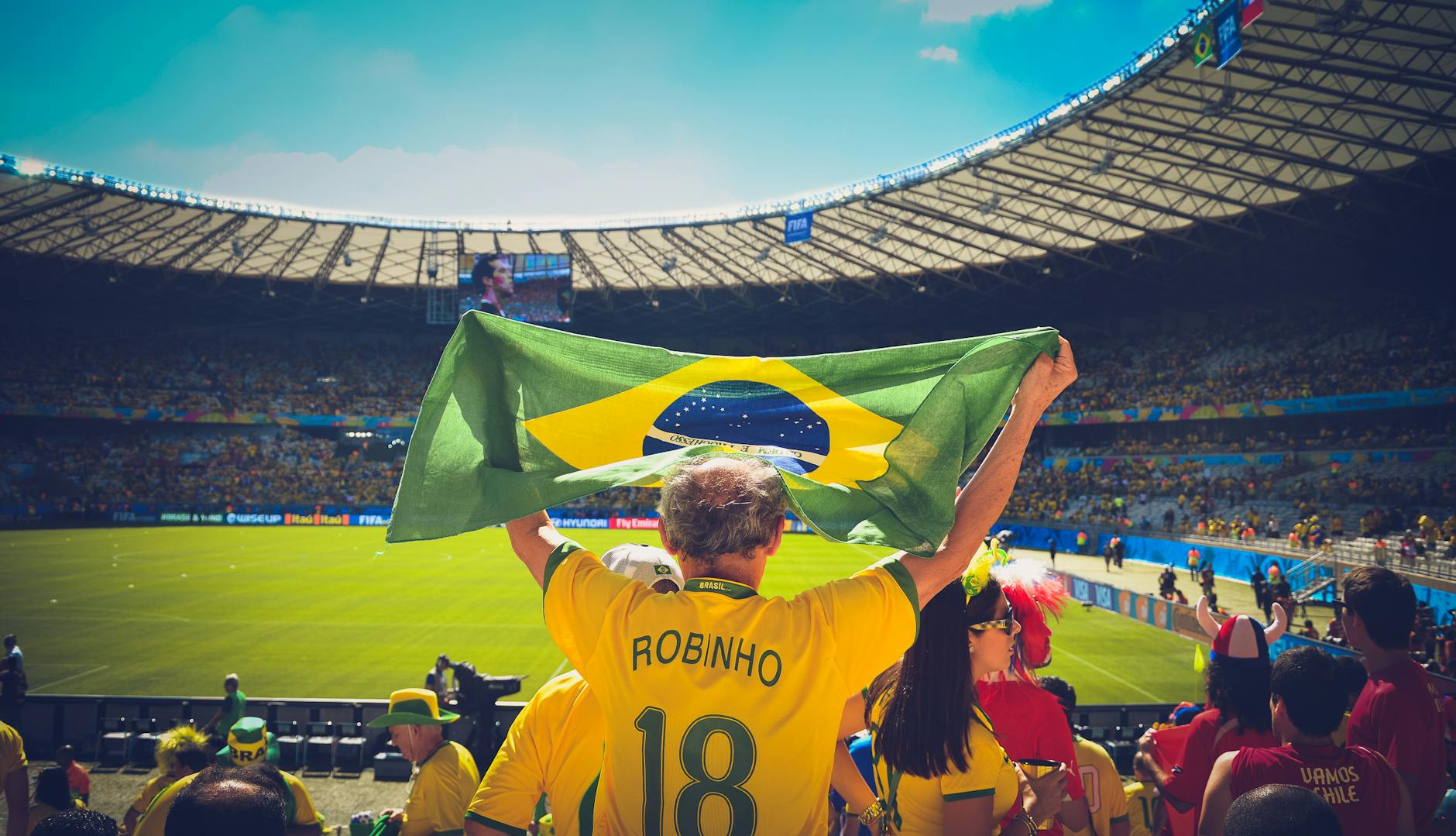
Photo by Caio on Pexels
Most FIFA World Cup content gets one thing wrong: it treats the tournament as a celebration first and a decision-making problem second. That is fine for casual fans, but it is dangerous for bettors, fantasy players, and tactical readers who want sharper judgment. The 2026 FIFA World Cup will not simply be “bigger”; it will be structurally different, commercially louder, and more volatile than Qatar 2022 or Russia 2018. Tactical Review approaches the tournament skeptically because expanded formats often create weaker assumptions, not easier predictions.
Want sharper context before the market noise gets louder?
Is the 2026 FIFA World Cup really predictable?
No, the 2026 FIFA World Cup is less predictable than many previews suggest because the field expands to 48 teams, the match count rises to 104, and the knockout round begins earlier with 32 teams. More fixtures create more data, but also more fatigue, rotation, and pricing traps.
First, bettors often mistake “more teams” for “more mismatches,” but that is only partly true. According to FIFA, the 2026 tournament will be staged across Canada, Mexico, and the United States, making it the first men’s World Cup hosted by three countries. That matters because travel distance, climate, time zones, and venue familiarity will not affect every team equally. A European side moving between humid Miami, high-altitude Mexico City, and cooler Vancouver may face a different physical challenge than a CONCACAF team used to regional travel.
Then there is the format problem. The FIFA World Cup overview on Wikipedia records the tournament’s long history from 1930 onward, but historical comparison becomes weaker when the structure changes. Trends from 32-team editions can still help, but they should not be copied blindly into 2026 models. A practical edge is to separate three markets: group-stage favorites, third-match rotation spots, and early knockout volatility. Tactical Review readers should treat each phase as a separate betting environment rather than one continuous form table. For deeper preparation, see our [Internal Link: 2026 World Cup format betting guide].
Common prediction mistakes include:
- Overrating FIFA rankings without checking tactical fit.
- Assuming elite squads will press aggressively in every group match.
- Ignoring travel recovery between venues.
- Betting early knockout matches like group-stage mismatches.
- Using club form without adjusting for national-team roles.
How does the 2026 FIFA World Cup handle expanded qualification?
The 2026 FIFA World Cup handles expansion by increasing the final tournament to 48 teams and widening qualification access across confederations. That creates more underdog stories, but it also introduces uneven squad depth, unfamiliar tactical profiles, and softer public assumptions in early betting markets.
The popular claim is that expansion automatically lowers quality. That is too lazy. First, it is true that some new qualifiers may lack the depth of Germany, Argentina, Spain, or Brazil. Then again, World Cup history has repeatedly shown that compact defensive systems can embarrass superior squads over 90 minutes. Finally, the expanded field gives analysts more tactical variety: low blocks from one region, transition-heavy sides from another, and set-piece specialists who can make price models uncomfortable.
A useful practitioner-level insight is that the third group match may become more deceptive in 2026 than in previous editions. With 12 groups of four and 32 knockout places, some teams may need only a draw, while others may rotate heavily after two strong results. That means the market may overprice famous shirts and underprice motivation clarity. Before betting, check not only points and goal difference, but also likely bracket incentives, yellow-card risk, injury management, and whether a manager has a history of rotating goalkeepers, fullbacks, or central midfielders in compressed tournaments.
See the details behind smarter tournament preparation.
What about betting on World Cup favorites?
Betting on FIFA World Cup favorites is not automatically safer because public demand often shortens odds on Brazil, France, Argentina, England, Spain, and Germany. The better question is whether the price still reflects tactical superiority after injuries, venue conditions, squad balance, and knockout-path risk.
First, a favorite must be evaluated by role clarity, not reputation. France may have elite athletes, Argentina may have tournament experience, and Brazil may carry attacking depth, but none of that guarantees value if the odds already assume dominance. Then you should test the favorite against specific match states: Can they break a five-man defense? Can their center backs defend open grass? Can their midfield control tempo if the opponent refuses to press? Finally, compare the market’s implied probability with your own number before accepting a short price.
This is where many bettors make the sixth major mistake: they confuse “likely to win” with “worth betting.” A team priced at 1.35 may deserve to be favored and still be a poor wager if the realistic probability is closer to 68 percent than 74 percent. The International Betting Integrity Association has repeatedly emphasized the importance of integrity monitoring in global betting markets; its published materials state that “sporting integrity is at the heart of regulated betting.” For readers, the takeaway is simple: regulated markets are safer, but they are not automatically generous.
Checklist before backing a favorite:
- Confirm the starting goalkeeper and defensive line.
- Review travel and rest days between matches.
- Compare expected goals trends with actual finishing.
- Watch how the team performs when scoring first and when conceding first.
- Avoid doubling stakes just because the team is famous.
For market education, review our [Internal Link: football odds and implied probability guide].
Where does World Cup analysis fail?
World Cup analysis fails when it overuses history, highlights, and star-player narratives while underweighting tactical constraints. The biggest blind spots are squad role changes, tournament fatigue, officiating variation, market overreaction, and the false belief that national-team football follows club-football patterns.
First, club statistics are useful but incomplete. A winger who plays 35 matches for Manchester City, Real Madrid, Paris Saint-Germain, or Inter Milan may have different spacing, pressing support, and passing options with his national team. Then there is the national-team training problem: managers have limited time to install complex systems, so many teams simplify their pressing triggers and rely more heavily on set pieces. Finally, small tactical weaknesses become magnified in knockout football because one transition, one penalty, or one red card can erase 80 minutes of control.
A less-discussed edge is substitution timing. In domestic leagues, elite managers often rotate based on fixture congestion and long-term fatigue. In the FIFA World Cup, substitutions may be shaped by heat, extra time risk, suspension management, and penalty-taker preservation. After tracking Qatar 2022 knockout matches, a practical pattern stood out: teams protecting a narrow lead often defended deeper after the 70th minute, even when they had dominated possession earlier. That creates live-betting opportunities on corners, cards, territory, and late equalizer pressure rather than only match winner markets.
Go beyond basic predictions with tactical context.
Where does the 2026 FIFA World Cup fail bettors?
The 2026 FIFA World Cup fails bettors when its spectacle hides weak assumptions. Larger groups, more venues, more travel, and more public attention can make odds look familiar while the underlying conditions are new, especially in North American stadiums across different climates and time zones.
First, the tournament will invite emotional betting from millions of casual fans. That does not mean every public side is wrong, but it does mean prices around famous national teams can become inflated. Then, broadcast narratives may exaggerate momentum after one comfortable win against a limited opponent. Finally, odds may shift faster than tactical reality, especially when social media amplifies training clips, minor injuries, or vague comments from managers.
The seventh mistake is ignoring responsible gambling discipline. Tactical Review operates in a gambling-adjacent industry, but the sharper position is not “bet more”; it is “bet less, but with better reasons.” Set a tournament bankroll before the opening match, cap single-stake exposure, and avoid chasing during knockout extra time. If your model depends on one superstar scoring, one referee being lenient, or one underdog defending perfectly for 90 minutes, the bet is probably more fragile than the price suggests. For further reading, use our [Internal Link: responsible football betting bankroll plan].
A disciplined World Cup process looks like this:
- First, build pre-tournament team ratings.
- Then, adjust ratings after confirmed lineups and venue context.
- Next, compare your probability with market odds.
- Finally, stake only when the edge remains after fees, limits, and uncertainty.
Should you try FIFA World Cup betting today?
Yes, you can try FIFA World Cup betting today if you treat it as a structured research project, not a patriotic guessing game. Start with small stakes, use regulated operators, track every wager, and rely on tactical evidence rather than headlines or social-media confidence.
First, build your own reference sheet before the 2026 FIFA World Cup begins. Include each team’s likely formation, set-piece takers, penalty takers, injury concerns, travel schedule, and manager tendencies. Then update that sheet after every match instead of rewriting your view based on one result. Finally, compare Tactical Review match previews with your own numbers so you learn where you disagree. This approach is slower than following hot tips, but it protects you from the most common World Cup mistakes.
The refined position is skeptical but not cynical. The FIFA World Cup remains the most watched football event on Earth, and the 2026 edition will create extraordinary tactical and betting storylines across the United States, Canada, and Mexico. However, the edge will not come from knowing that France are talented or Brazil are dangerous. It will come from identifying when the market has priced those facts too aggressively, when a tactical matchup is misunderstood, and when doing nothing is the smartest move.
Ready to follow the 2026 tournament with sharper daily analysis?
Frequently Asked Questions
Q: What is the FIFA World Cup?
A: The FIFA World Cup is the leading men’s international football tournament organized by FIFA every four years. The competition began in 1930 and brings together qualified national teams from confederations such as UEFA, CONMEBOL, CONCACAF, CAF, AFC, and OFC. In 2026, it expands to 48 teams and will be hosted by the United States, Canada, and Mexico.
Q: How to start analyzing the 2026 FIFA World Cup?
A: Start by studying the format, team groups, squad lists, and venue schedule before looking at odds. First, create baseline ratings for each national team; then add tactical notes on formations, set pieces, and defensive structure. Finally, update your view after confirmed lineups because World Cup markets can move quickly on injury and rotation news.
Q: Is betting on FIFA World Cup favorites worth it?
A: Betting on favorites is worth it only when the odds are higher than your estimated probability. Teams such as Brazil, France, Argentina, England, and Spain often attract public money, which can shorten prices before kickoff. A favorite can be the better team and still be a bad bet if the market has already overpaid for its reputation.
Q: What is the difference between World Cup betting and league betting?
A: World Cup betting is more volatile because national teams play fewer matches together and face neutral-site tournament pressure. League betting gives analysts larger data samples, repeated tactical patterns, and clearer home-away trends. In the World Cup, travel, short preparation time, knockout pressure, and one-match variance can matter more than season-long form.
Q: Why do FIFA World Cup predictions fail?
A: FIFA World Cup predictions fail when they rely too heavily on rankings, star names, or previous tournaments. A national team may look strong on paper but struggle against a compact low block, aggressive transition side, or unfamiliar climate. Predictions improve when you combine team news, tactical fit, venue context, and market price discipline.
Q: How much money do you need to bet on the World Cup?
A: You do not need a large bankroll to bet on the FIFA World Cup responsibly. A practical starting point is to set a fixed entertainment budget and risk only 1 to 2 percent of it per wager. If losing that amount would affect your finances or mood, the stake is too high and should be reduced.
Q: What should you do if your World Cup betting strategy fails?
A: Stop betting temporarily and review your records before placing another wager. Check whether losses came from poor odds, bad information, emotional staking, or normal variance. Then reduce stake size, narrow your markets, and focus on matches where you have a clear tactical reason rather than trying to recover losses quickly.
Thank you for reading.
Tactical Review · Latest Insights