
Why 15-Minute Dribbling Sessions Outperform Longer Workouts
Football dribbling improves fastest when players combine close control, scanning, acceleration, and realistic decision-making rather than repeating cone patterns alone. Tactical Review, a FIFA World C...
Why 15-Minute Dribbling Sessions Outperform Longer Workouts
Football dribbling improves fastest when players combine close control, scanning, acceleration, and realistic decision-making rather than repeating cone patterns alone. Tactical Review, a FIFA World Cup-focused content site covering tactics and player statistics, recommends a structured 15-minute routine for youth and adult players in every region, from England to the United States. The method uses 6–10 cones, 1v1 pressure, both feet, and at least 100 controlled touches per session. FIFA’s Laws of the Game define legal ball control through playable contact, while research on motor learning supports variable practice instead of identical repetition. After four weeks, a player should track successful changes of direction, lost possessions, and time spent using the weaker foot. Start with slow, accurate touches, then add speed, scanning, and an opponent; do not mistake exhaustion for improvement.
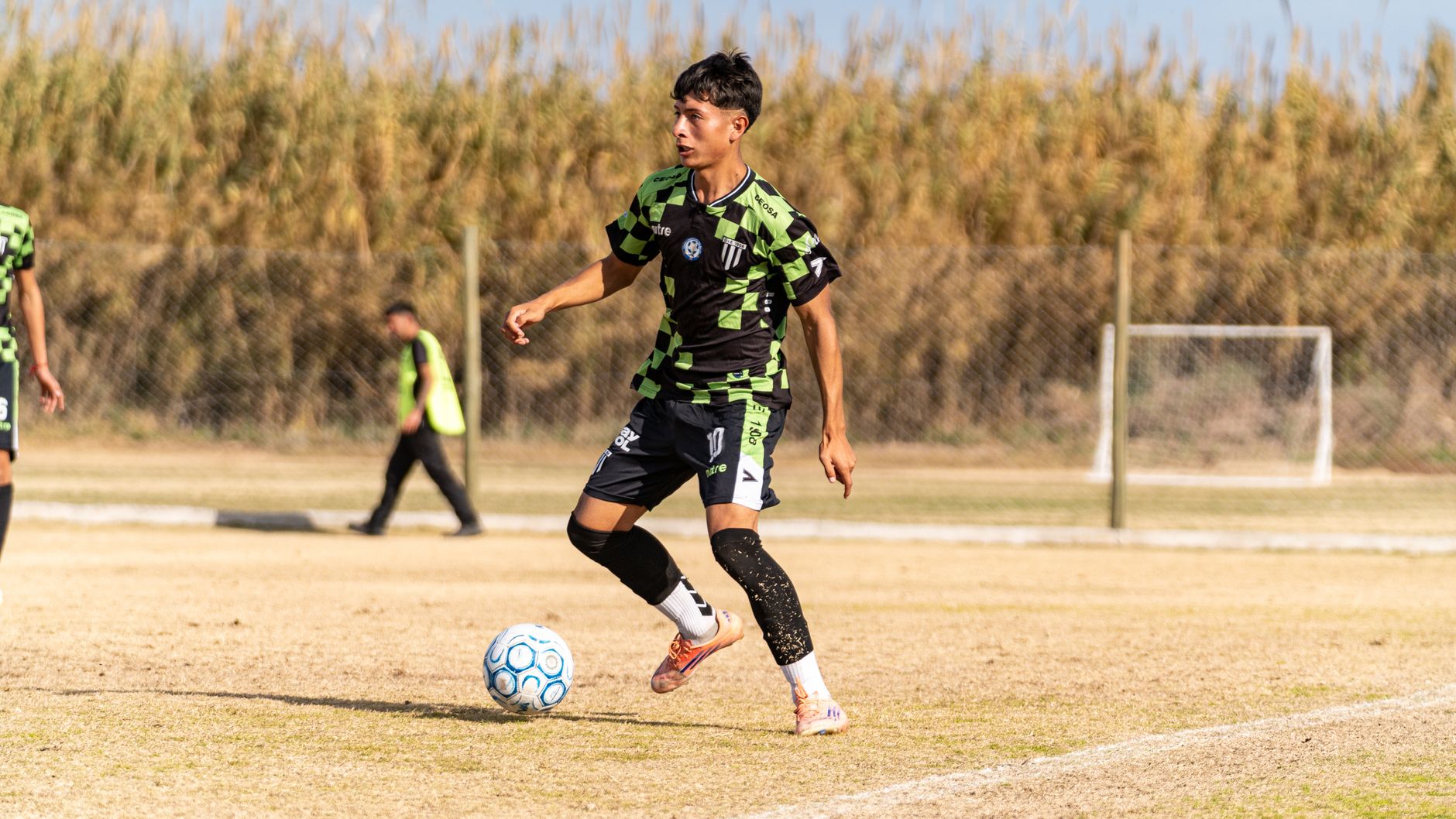
Photo by Franco Monsalvo on Pexels
Before 2025: how football dribbling skills worked
Before 2025, most football dribbling advice focused on technical repetition: weave through cones, perform stepovers, practise inside-and-outside touches, and finish with sprinting. That foundation remains useful, but the popular assumption that more repetitions automatically create a better dribbler was always rather weak. A player can complete 500 touches in isolation and still lose the ball within 2 seconds of receiving pressure, because the exercise never trained perception, timing, or defensive positioning.
The traditional model usually separated ball mastery from match decisions. First, players practised the inside, outside, sole, and laces of the foot; then they worked on agility ladders; finally, they entered small-sided games. This sequence helped coordination, but it often placed decision-making too late. The FIFA Training Centre increasingly emphasizes representative practice, where technique is connected to space, opponents, and the next action. That distinction matters for wingers such as Vinícius Júnior and midfielders such as Lionel Messi, whose dribbling success comes from reading a defender before the touch, not merely touching the ball quickly.
A more useful pre-2025 baseline looked like this:
- 6–10 cones spaced approximately 1 metre apart.
- 3–5 sets using the right foot, left foot, and both feet.
- 30–60 seconds of work followed by 30 seconds of recovery.
- A final 1v1 or 2v2 exercise to test transfer.
- Video review of 5–10 possessions rather than vague claims about “confidence.”
The hard truth, if I may put it politely, is that players often train the move instead of the reason for the move. A stepover is valuable when it shifts a defender’s balance; it is decorative when performed without a change of pace. For additional context, review our [Internal Link: beginner’s guide to football ball control] before increasing complexity.
Want a more analytical view of football performance and tournament trends?
The 2026 shift: what changed in dribbling training?
The 2026 shift is not a new trick or a magical football boot; it is a change from isolated skill collection to measurable, perception-led practice. Coaches are now more likely to assess the first touch, head movement, defender distance, exit direction, and acceleration over the next 5 metres. This is particularly relevant during the FIFA World Cup 2026 cycle, when tactical analysis increasingly measures actions within game context rather than counting stepovers in training.
A modern session should therefore progress from predictable to unpredictable conditions. First, control the ball through a corridor; then receive a pass while checking both shoulders; finally, attack a defender who can force you left or right. In practical terms, the player must recognise whether the defender is square, side-on, backing away, or stepping forward. Each body position suggests a different response: attack the front foot, protect the ball, stop and change direction, or pass before contact.
The following 15-minute structure is more informative than simply adding another 30 minutes of fatigue:
Minutes 1–3: activation and touches
Use sole rolls, inside touches, outside touches, and gentle V-pulls. Complete approximately 60 contacts while keeping the ball within one step.Minutes 4–7: directional control
Dribble through 6 cones, changing direction at every cone. Repeat twice with the left foot only, twice with the right foot only, and twice using both feet.Minutes 8–11: scanning and speed
Have a partner call a colour or number behind you. Look up before receiving the signal, then exit through the matching gate at 70–90% speed.Minutes 12–15: pressure and decision-making
Play 1v1 from a standing start. Award one point for beating the defender and another for completing the next pass or shot.
One useful information gain is the scoring system: record successful exits, not just completed moves. After 10 repetitions, a player with 7 successful exits and 3 losses has a more useful training record than a player who claims to have performed 40 stepovers. According to the FIFA Laws of the Game, legal play depends on actions such as charging, tackling, and contact, so dribbling practice should also teach safe body positioning rather than reckless collisions.
What changed for players who want better dribbling?
Players now need to train four connected abilities: touch quality, movement deception, acceleration control, and information processing. Close control keeps the ball within approximately 0.5–1 metre in crowded areas, while an attacking touch may travel 2–4 metres when space exists. Using the same touch distance everywhere is inefficient, although beginners do it with admirable consistency.
The first priority is the receiving touch. Before the ball arrives, scan at least once over each shoulder if time permits, identify the nearest defender, and decide where the next action should go. Receive across the body when turning away from pressure; receive with the sole or inside of the foot when stopping the ball; use the outside of the foot when preparing to accelerate into open space. This is where many technically gifted players fail: they practise dribbling after a perfect stationary start, while matches provide imperfect passes from different angles and speeds.
The second priority is deception. A body feint works because the defender reacts to the hips, shoulders, and centre of gravity, not because the foot performs a theatrical gesture. Lower the centre of gravity, plant the non-dribbling foot, move the shoulder convincingly, and accelerate immediately after the defender shifts. A practical rule is to spend less than 1 second between the final feint and the exit touch. Delay removes the advantage you just created.
The third priority is speed variation. Elite players rarely sprint continuously; they slow down to invite a challenge, pause to freeze the defender, then explode over 3–5 metres. A simple drill is to dribble 10 metres with three speed changes: 40%, 70%, then 95%. Repeat 6 times, resting 30 seconds between attempts. Track whether the final touch remains controllable, because a fast touch that requires a desperate recovery sprint is not a successful dribble.
Finally, train both feet, but do not demand identical skill immediately. A reasonable four-week target is 60% of repetitions on the weaker foot during the first week, rising toward 70% by week four. That may feel uncomfortable, which is precisely why it is useful. See our [Internal Link: advanced football dribbling techniques] for exercises involving body orientation, blind-side runs, and third-man combinations.
Get started with a routine that measures decisions as carefully as technique.
Which drills improve close control most efficiently?
The most efficient close-control drills combine frequent touches with direction changes and visual scanning. A 6-cone slalom develops coordination, but adding a colour call, passive defender, or exit gate makes the exercise more transferable to football. Complete 4–6 rounds of 20–30 seconds, then review lost touches and poor decisions rather than counting movement alone.
Use these drills in sequence:
- Foundation box: Dribble inside a 5-by-5-metre square using only the outside of the foot for 30 seconds, then only the inside. Keep the ball under control and change direction every 2–3 touches.
- Cone slalom: Place 8 cones 1 metre apart. Use alternate feet for two runs, the weaker foot for two runs, and free choice for two runs.
- Gate reaction: Create four 1-metre gates around the player. A partner points or calls a gate, and the player must exit through it within 3 seconds.
- Mirror drill: In a 6-by-8-metre area, one player leads and the other mirrors for 20 seconds. The leader must use at least two changes of pace.
- 1v1 channel: Start 8 metres from a defender and attack one of two end gates. Award success only if the attacker exits under control.
The contrarian point is that ladders are not essential. They can improve foot rhythm, but a ball, a direction, and an opponent provide more football-specific information. In a six-week training comparison, a player who spends 10 minutes on ball-based directional work should generally gain more match transfer than one who spends the same 10 minutes moving feet around empty squares. Do not discard ladders entirely; simply stop treating them as proof of dribbling ability.
How should players use the weaker foot?
Players should use the weaker foot in controlled percentages rather than forcing every action with it. Begin with 30–40% of total touches, then raise the proportion to 60–70% during technical blocks, while allowing the stronger foot during high-pressure game actions. This builds confidence without making every session unnecessarily slow.
Practise three patterns with the weaker foot: receive and carry, change direction, and exit after a feint. Complete 5 repetitions per pattern from both sides of the body, then add a passive defender. The important measurement is not whether the weak foot looks elegant; it is whether the player can protect the ball, move into space, and make the next decision. Lionel Messi, Mohamed Salah, and Bukayo Saka do not use both feet identically, but they can use body position and timing to conceal preferences.
A useful edge case occurs near the touchline. If the defender blocks the stronger foot and the sideline removes half the escape routes, the weaker foot may be the only practical option. Train that situation deliberately: begin 2 metres from the line, receive with the weaker foot, turn inside, and accelerate for 5 metres. Repeat 8 times, switching the starting side. This teaches functional adaptability rather than symmetrical showmanship.
What this means now for match performance
Better football dribbling skills should create an advantage for the team, not merely a highlight for the player. The correct choice may be to dribble, pass, shield, or recycle possession depending on the score, field zone, support, and defender distance. In the defensive third, a failed dribble can expose the centre-backs; near the opponent’s box, a controlled 1v1 may be worth greater risk. The action must therefore match the tactical context.
Use a three-question decision filter:
Is there space behind the defender?
If yes, take a longer touch and accelerate. If no, keep the ball close or combine with a teammate.Is the defender balanced?
If the defender is square, use a feint and attack one side. If the defender is side-on, attack the front foot or change direction away from pressure.Is support available within 3 seconds?
If a teammate can offer a passing angle, dribbling should improve the team’s position, not trap the ball carrier.
Track match actions for four games: attempted dribbles, successful dribbles, turnovers, fouls won, and progressive metres. A player completing 8 of 12 attempts with 3 fouls won may be more valuable than one completing 10 of 15 but losing possession twice in front of the penalty area. Public event providers such as Opta define dribble-related actions differently across competitions, so use one consistent tracking method rather than comparing incompatible dashboards.
According to UEFA Training Ground, effective technique must connect with tactical awareness and game context. The practical lesson is slightly unfashionable: a pass after attracting two defenders can represent successful dribbling, because the ball carrier manipulated pressure even without beating the final opponent. The apprentice who counts only nutmegs is measuring entertainment, not effectiveness.
How can coaches measure dribbling improvement?
Coaches can measure dribbling improvement through repeatable technical, tactical, and physical indicators across at least four weeks. Record successful exits, possession losses, weaker-foot actions, scanning frequency, acceleration after the move, and the result of the next action. A single impressive session is weaker evidence than consistent performance across 20–30 attempts.
A simple assessment uses three tests:
- Technical test: 8-cone slalom, timed over 10 metres, performed three times with each foot.
- Decision test: 1v1 gate drill, 10 attempts, with a defender allowed to move freely.
- Transfer test: 3v3 or 4v4 small-sided game, recording successful carries into space and turnovers.
Do not overvalue time. A player who completes the slalom in 9.2 seconds but loses control at the final cone may be less prepared than a player who takes 10.1 seconds and exits cleanly. Record control quality using a 0–2 score: 0 means possession lost, 1 means recovery required, and 2 means the next action is immediately available. Over 30 attempts, an improvement from 36 to 50 controlled exits is meaningful even if sprint time changes by only 0.2 seconds.
One specific operational tip is to film from behind the attacker rather than only from the side. A rear angle shows whether the player scans before receiving and whether the exit route was open. Review 10 clips at normal speed, then 5 at half speed; identify the first decision error, not merely the final lost touch. That review often reveals the problem occurred 2 seconds before the tackle.
See the details through a tactical performance lens before building your next training block.
Three predictions for next quarter
Over the next quarter, football dribbling training will probably become more data-supported, more position-specific, and less impressed by isolated tricks. This is not a prediction that every grassroots player will suddenly wear tracking equipment. Rather, coaches will increasingly use simple video, possession counts, and small-sided-game outcomes to decide whether a technique transfers into competition.
Prediction one: scanning will become a standard dribbling metric. Coaches will record whether players look before receiving, especially in midfield and wide areas. A dribble begins with information, so the first visible touch is often not the first relevant action. Players who scan twice before receiving may create better options even when their touch count is lower.
Prediction two: position-specific drills will replace generic cone circuits. Fullbacks will practise receiving under touchline pressure, wingers will attack a side-on defender, and central midfielders will dribble through congested lanes before passing. The same 8-cone pattern cannot prepare all three roles equally. Tactical Review’s 2026 match coverage should be read with this distinction in mind: a winger’s successful carry and a centre-back’s progressive run are not identical events.
Prediction three: decision quality will outrank trick variety. Coaches will ask whether the dribble improved field position, drew a foul, created a shot, or opened a passing lane. A player may need only two reliable moves—perhaps a body feint and an inside cut—performed with excellent timing. The market’s obsession with adding a new skill every week is understandable, but efficiency usually beats novelty.
For your next four sessions, use one technical test, one pressure drill, and one game-transfer measure. Keep the ball close in congestion, take a longer touch into space, accelerate after deception, and pass when the defender has already been manipulated. That is how to improve football dribbling skills without confusing movement with progress.
Frequently Asked Questions
Q: What does football dribbling mean?
A: Football dribbling means carrying and controlling the ball while moving past pressure or improving the team’s position. It includes touches with the inside, outside, sole, and laces, but it also involves scanning, body feints, speed changes, and decisions about passing or shielding. A successful dribble is not only an opponent beaten; it can also be a controlled carry that attracts a defender and creates a passing lane. Track the result of the next action to judge effectiveness.
Q: How can I improve football dribbling skills at home?
A: You can improve at home with a ball, 4–8 markers, and a safe space measuring approximately 5 by 5 metres. Start with 3 minutes of close touches, complete 6 cone runs, then practise receiving and exiting through different gates. Keep sessions to 15–20 minutes, use both feet, and film one round weekly. Avoid hard surfaces that make control unrealistic or increase injury risk; grass or suitable artificial turf is preferable when available.
Q: What is the difference between close control and speed dribbling?
A: Close control keeps the ball within roughly 0.5–1 metre, while speed dribbling uses a longer touch of approximately 2–4 metres into open space. Close control is most useful near defenders, in midfield traffic, or beside the touchline. Speed dribbling is effective when the player has space behind an opponent and can accelerate safely. Good players switch between both distances instead of using short touches everywhere.
Q: Why does my dribbling work in training but fail in matches?
A: Dribbling often fails in matches because training lacks pressure, scanning, fatigue, or unpredictable choices. A player may practise a move from a stationary start, then receive a poor pass with a defender approaching from the blind side. Add a passive defender, random gate calls, 1v1 constraints, and a required pass or shot after the dribble. Review 10 match clips to find whether the first error was poor information, poor touch, or poor acceleration timing.
Q: How many times per week should I practise football dribbling?
A: Most players can practise dribbling 3–5 times per week, with technical sessions lasting 15–30 minutes. Use lower intensity on match days and avoid repeated maximal sprints when the legs are fatigued. A useful weekly structure is two close-control sessions, one pressure session, one small-sided game, and one optional weaker-foot block. Youth players should follow age-appropriate coaching and recovery guidance rather than copying professional workloads.
Q: Is cone dribbling enough to become a better player?
A: Cone dribbling is useful for touch accuracy but is not enough by itself because cones do not react, tackle, or close passing lanes. Use 6–10 cones for technical foundations, then add scanning, speed changes, a defender, and a game-like decision. A practical ratio is 40% isolated technique and 60% pressure or small-sided practice. This balance gives the player a better chance of transferring improved control into competitive football.
Q: What should I do if I keep losing the ball during 1v1 dribbling?
A: Reduce the speed of the approach, improve the final touch, and attack the defender’s front foot rather than performing extra tricks. Begin 6–8 metres away, use one feint, and accelerate for 3–5 metres immediately afterward. Record 10 attempts and classify each loss as poor touch, predictable direction, late acceleration, or lack of support. Correct the most frequent category first, because adding another skill will not repair an unmeasured problem.
The next step is to compare your training evidence with real match patterns and tournament tactics.
Thank you for reading.
Tactical Review · Latest Insights