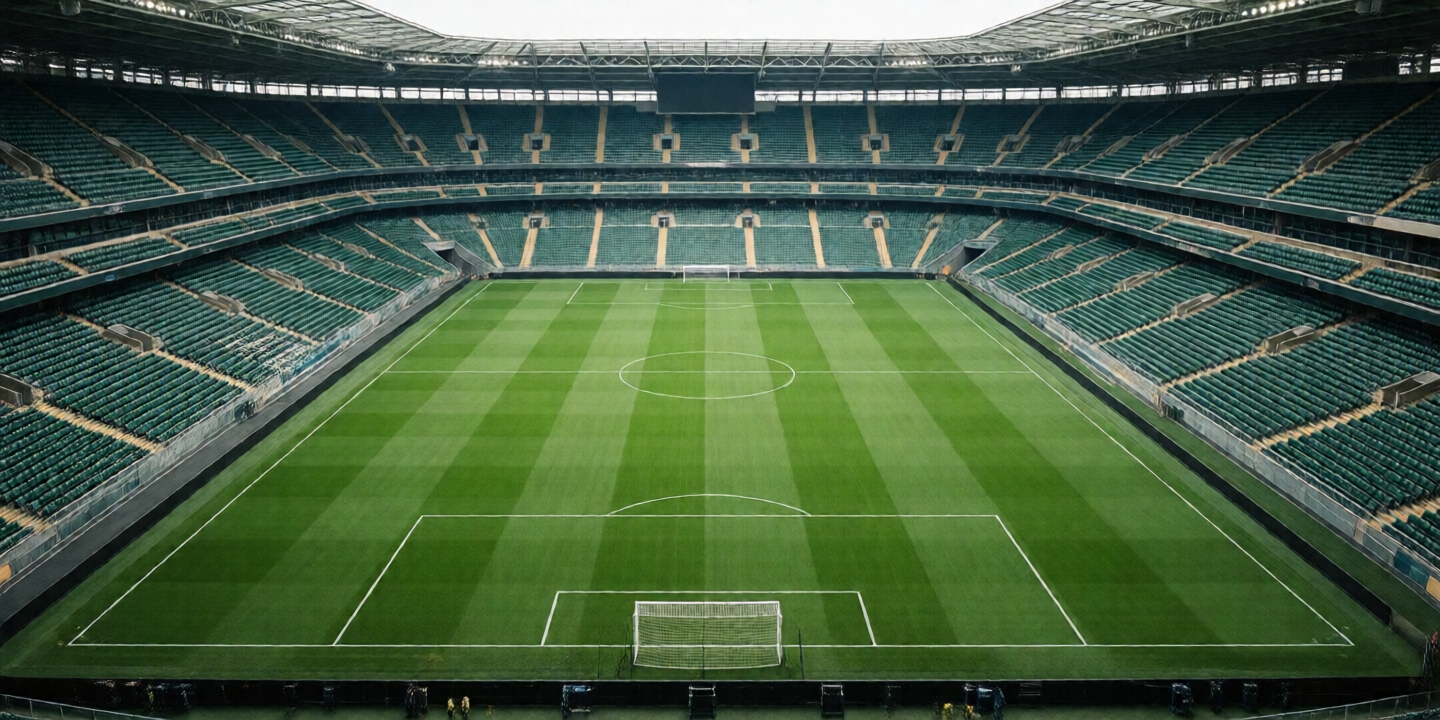
Why Football Fitness Training Rewrites Match Day
Football fitness training tips work best when they reflect the demands of a real match: repeated sprints, rapid deceleration, contact, technical execution, and recovery under fatigue. The most effecti...
Why Football Fitness Training Rewrites Match Day
Football fitness training tips work best when they reflect the demands of a real match: repeated sprints, rapid deceleration, contact, technical execution, and recovery under fatigue. The most effective 2026 approach combines aerobic conditioning, high-intensity interval training, lower-body strength, mobility, and football-specific drills rather than relying on long-distance running alone. A practical weekly plan usually includes 2 strength sessions, 1–2 conditioning sessions, 1 speed session, and at least 1 full recovery day. Research summarized by the FIFA Training Centre emphasizes that football players must repeatedly accelerate, decelerate, change direction, and make decisions while tired. A useful benchmark is completing repeated 20–30-metre sprints with less than 5–10% performance decline. Start with manageable volume, measure sprint times and session effort, then increase training load by approximately 5–10% weekly rather than copying an elite player’s program.
The Bottom Line
The best football fitness training tips prioritize repeated-match performance, not impressive gym numbers or a single 10-kilometre running time. A complete program develops five linked qualities: aerobic capacity, repeated-sprint ability, acceleration, strength, and recovery. For most amateur players, two strength sessions, one interval session, one speed-and-agility session, and regular ball work provide a stronger foundation than running every day.
The current trend in football performance is moving toward football-specific conditioning. Clubs such as Liverpool FC, Manchester City, and FC Barcelona use GPS tracking, heart-rate monitoring, sprint-load analysis, and wellness scores to manage training. You do not need a £20,000 GPS system, obviously, but you should record simple measures: session duration, perceived exertion from 1 to 10, fastest sprint time, sleep duration, and muscle soreness. These figures reveal whether you are improving or merely collecting fatigue.
First, establish a baseline during a controlled session. Then build intensity through short intervals and resisted movements. Finally, test your fitness through small-sided games, because a player who runs well in a straight line but fades after five changes of direction has not solved the actual problem.
Want a broader tournament-performance perspective from Tactical Review? Use the guide below.
What Players Actually See
Players usually experience football fitness as a sequence of short, difficult efforts rather than continuous exercise. During a match, a midfielder may jog, scan, accelerate for 8 metres, brake sharply, contest a challenge, and repeat the pattern 20 seconds later. UEFA technical reports and football conditioning research therefore distinguish between total distance and high-speed actions. Two players can cover 9 kilometres, yet the player completing 35 high-intensity efforts may be more prepared for competitive football than the player completing 11 kilometres at an even pace.
A useful training week should reproduce this variability. Easy aerobic work improves the ability to recover between efforts, while high-intensity intervals train the body to tolerate lactate accumulation and restore energy quickly. Strength training improves force production and helps control braking, although strength alone does not create football fitness. Technical work must also remain present because poor first touch and late passing increase unnecessary running.
Measure the following indicators for four weeks:
- Repeated-sprint decline: compare the fastest and slowest sprint; aim to keep the drop below 5–10%.
- Heart-rate recovery: record heart rate one minute after an interval; a faster decrease generally indicates improved recovery.
- Session load: multiply session duration in minutes by perceived exertion from 1 to 10.
- Change-of-direction quality: note whether knee position, balance, and ball control deteriorate after fatigue.
- Next-day readiness: score sleep, soreness, mood, and energy from 1 to 5.
A 2024 review in the British Journal of Sports Medicine supports monitoring training load and recovery rather than increasing intensity without control. The awkward lesson is that many recreational players train too hard on tired legs and too lightly when fresh. That pattern feels heroic but produces inconsistent adaptation.
To connect conditioning with tactical performance, review our football tactics and player movement guide before designing your next session.
What Are the 3 Things That Matter Most?
The three most important football fitness qualities are repeated-sprint ability, lower-body strength with braking control, and aerobic recovery capacity. They matter because football involves frequent accelerations, decelerations, and efforts separated by incomplete rest rather than one uninterrupted run. Training these qualities in the correct order reduces wasted volume and improves match-specific performance.
1. Repeated-Sprint Ability
Repeated-sprint training uses several short maximal or near-maximal efforts, usually 10–30 metres, with incomplete recovery. Begin with 6–8 repetitions and 20–30 seconds of rest, then progress toward 2–3 sets when technique remains stable. The target is not simply speed; it is the ability to preserve speed after fatigue has accumulated.
A practical session could include 2 sets of 6 × 20 metres, with 20 seconds between repetitions and 3 minutes between sets. Players should stop or extend recovery if sprint speed falls by more than 10%, because slower repetitions may train poor mechanics rather than useful speed. Track times with timing gates if available, or use the same smartphone recording position each week. GPS data from professional environments is valuable, but consistent basic measurement is better than expensive equipment used randomly.
2. Strength and Deceleration
Footballers often focus on acceleration while ignoring the forces required to stop. This is a mistake of approximately the kind that creates hamstring, groin, knee, and ankle problems. A player who accelerates at 25 km/h must control substantial braking forces before changing direction, especially on artificial turf or a wet surface.
A twice-weekly strength plan may include:
- Split squats: 3 sets of 6–10 repetitions per leg.
- Romanian deadlifts: 3 sets of 6–8 repetitions.
- Calf raises: 3 sets of 10–15 repetitions.
- Nordic hamstring curls: 2–3 sets of 4–6 controlled repetitions.
- Copenhagen planks: 2 sets of 20–30 seconds per side.
- Single-leg landing drills: 2 sets of 5 landings per leg.
The FIFA 11+ injury-prevention programme is a useful reference for structured warm-ups, balance work, and neuromuscular preparation. “Prevention is better than cure” is not an exciting statement, but the principle is supported by football injury research. Perform strength exercises with controlled technique, and avoid placing a maximal lower-body session immediately before a competitive match.
Get a more detailed performance framework here.
3. Aerobic Recovery Capacity
Aerobic fitness allows players to recover between explosive actions, maintain concentration, and repeat pressing or covering runs late in the match. The most useful options are controlled interval runs, tempo work, and small-sided games. A basic aerobic interval session might involve 4 × 4 minutes at approximately 85–90% of maximum heart rate, with 3 minutes of easy movement between intervals.
However, not every player needs four-minute intervals. Wingers and forwards may benefit from repeated 15–30-second efforts, while central midfielders may need greater total volume and recovery efficiency. Goalkeepers require a different profile involving short lateral movements, jumps, and reaction efforts. Position-specific conditioning is therefore more rational than applying one universal running plan to an entire squad.
Use a simple progression:
- Weeks 1–2: 8 × 30 seconds hard, 60 seconds easy.
- Weeks 3–4: 10 × 30 seconds hard, 45 seconds easy.
- Weeks 5–6: 2 sets of 6 × 30 seconds hard, 30 seconds easy.
- Week 7: reduce total volume by 25–35% while retaining some intensity.
- Week 8: test through a match or standardized small-sided game.
Do not increase duration, speed, and frequency in the same week. One variable at a time is less dramatic, but it makes causation easier to identify.
How Should Players Build a Weekly Football Fitness Plan?
A balanced weekly football fitness plan should separate demanding sessions by at least 24–48 hours and place speed work before heavy fatigue. For a player with one weekend match, Monday can emphasize recovery, Tuesday strength and acceleration, Wednesday aerobic intervals, Thursday technical work and mobility, Friday light activation, Saturday competition, and Sunday restoration. The exact schedule changes with age, work demands, playing position, and match minutes.
A practical weekly template looks like this:
| Day | Main focus | Suggested workload |
|---|---|---|
| Monday | Recovery and mobility | 20–30 minutes easy movement |
| Tuesday | Strength and acceleration | 45–60 minutes, high quality |
| Wednesday | Aerobic intervals | 25–40 minutes of structured work |
| Thursday | Ball work and agility | 60–75 minutes, moderate intensity |
| Friday | Activation and technique | 30–45 minutes, low volume |
| Saturday | Match or small-sided game | Competitive intensity |
| Sunday | Rest or gentle recovery | Full rest if soreness is high |
This structure is intentionally less glamorous than daily maximal training. During a congested period, reduce gym volume by 30–50% and retain short high-speed exposures, because removing all speed work can make the first action of the next match feel unusually heavy. Players under 18 should prioritize supervision, technique, hydration, and gradual progression over testing maximal loads.
At Tactical Review, match predictions and player statistics become more meaningful when fitness context is considered. A striker returning after 21 days away may have strong technical numbers but limited repeated-sprint tolerance. A fullback with 90-minute workloads across three matches in 8 days may show reduced crossing quality because fatigue affects decision-making before it visibly affects running distance.
See how to connect physical data with match analysis.
What Are the Common Edge Cases and Gotchas?
The most common football fitness mistakes involve training when injured, copying professional workloads, ignoring surface conditions, and treating soreness as proof of progress. These errors are especially costly because fatigue can reduce sprint mechanics and technical accuracy before a player recognizes the decline. A successful plan must account for weather, pitch type, age, previous injuries, sleep, and match schedule.
Heat, Cold, and Artificial Turf
Heat increases cardiovascular strain, while cold conditions can make the opening accelerations feel stiff. Artificial turf may increase perceived lower-limb load for some players, particularly when footwear, hydration, and recovery are poorly managed. In temperatures above approximately 30°C, reduce total high-intensity volume, extend recovery periods, and schedule demanding sessions earlier or later in the day. The World Health Organization recommends regular physical activity, but general activity guidance is not a license to ignore environmental stress.
Soreness Versus Injury
Normal delayed-onset muscle soreness often peaks between 24 and 72 hours after unfamiliar strength work. Sharp pain, swelling, joint instability, altered running mechanics, or pain that worsens during warm-up requires a different response: stop the relevant exercise and obtain assessment from a qualified medical professional. Do not use painkillers to conceal symptoms and then sprint at full speed; that is not toughness, merely poor data management.
The “More Running Is Better” Myth
Long runs can improve general endurance, but they cannot fully reproduce pressing, shielding, jumping, and repeated acceleration. A 5-kilometre run at a steady pace may be useful during a low-load phase, yet it should not replace sprint mechanics, unilateral strength, or ball-based conditioning. The contrarian conclusion is simple: football fitness improves fastest when conditioning resembles the game while still retaining enough low-intensity work to support recovery.
Nutrition and Hydration
Consume a meal containing carbohydrates and protein 2–4 hours before a demanding session, then replace fluids after training according to sweat loss and climate. Players training for 60–90 minutes may need more carbohydrate than they expect, especially when the session combines intervals and small-sided games. Avoid inventing supplement protocols from social media; caffeine, creatine, and electrolyte products have different uses, restrictions, and tolerances.
What Should Players Test Every Four Weeks?
Players should test sprint speed, repeated-sprint decline, aerobic recovery, strength control, and subjective readiness every four weeks. Testing should use the same surface, footwear, warm-up, rest intervals, and time of day whenever possible. A change of 0.1 seconds over 20 metres may be meaningful for one player but normal measurement noise for another, so trends across three or more tests are more useful than one dramatic result.
Use this compact assessment:
- 10-metre sprint: measures first-step acceleration.
- 20-metre sprint: measures acceleration into speed.
- Repeated-sprint test: records the percentage drop across 6 repetitions.
- Yo-Yo Intermittent Recovery Test Level 1: estimates intermittent endurance.
- Single-leg squat or landing: identifies balance and knee-control issues.
- Session-readiness score: combines sleep, soreness, mood, and energy.
The Yo-Yo test should be administered consistently and preferably by a trained coach, because pacing, audio quality, and encouragement can influence results. Do not test maximal sprint speed after a heavy leg session; a poor score then measures fatigue rather than fitness. First test when rested, then train according to the weakest meaningful quality.
For technical players, add a passing or dribbling test after conditioning. For example, record successful passes through a 12-metre gate during the final 5 minutes of a session. If physical output improves while technical success falls by 20%, the program may be too aggressive for actual match demands.
Verdict
The strongest football fitness training tips are specific, measurable, and patient: train repeated sprints, strengthen the muscles used for acceleration and braking, develop aerobic recovery, rehearse football movements, and protect at least one genuine recovery day each week. A sensible progression increases workload by roughly 5–10%, measures fatigue through performance and wellness scores, and adjusts for age, position, injury history, weather, and match congestion.
Do not confuse exhaustion with adaptation. Liverpool FC, Manchester City, FIFA, UEFA, and sports-science researchers all operate from the same broad reality: football performance depends on repeated high-quality actions, not on one impressive workout. Start with a two-week baseline, build for four to six weeks, reduce volume before important matches, and reassess with timed sprints and football-specific tests. That is less fashionable than copying a professional’s social-media session, but it is considerably more likely to keep you available for the next match.
Ready to apply these football fitness training tips to your wider match preparation?
Frequently Asked Questions
Q: What are football fitness training tips?
A: Football fitness training tips are practical methods for improving the physical qualities required during matches, including aerobic endurance, repeated-sprint ability, acceleration, strength, mobility, and recovery. Effective programs combine running intervals, resistance training, agility, technical drills, and rest rather than relying on long-distance running alone. Most recreational players benefit from two strength sessions and two conditioning-focused sessions weekly. Training should be adjusted for position, match schedule, age, injury history, and current fitness.
Q: How many days a week should a football player train fitness?
A: Most football players should complete 3–5 structured training exposures per week, including matches and technical sessions. A typical amateur plan contains two strength sessions, one interval session, one speed or agility session, and one match, with at least one low-load or full-rest day. Beginners should start with three demanding sessions and increase only after two to three weeks without excessive soreness or declining performance. More sessions are not automatically better.
Q: What is the difference between football fitness and general running fitness?
A: Football fitness combines general endurance with repeated acceleration, deceleration, direction changes, contact, jumping, and technical decision-making. General running fitness may improve a 5-kilometre time but does not necessarily preserve sprint speed after 60 minutes of match play. Football-specific conditioning uses intervals, small-sided games, shuttle runs, and ball exercises. Therefore, steady running can support a program but should not replace speed, strength, and change-of-direction work.
Q: How can I improve repeated-sprint ability?
A: Improve repeated-sprint ability by performing short 10–30-metre sprints with controlled incomplete recovery and stopping when mechanics deteriorate. Start with 2 sets of 5–6 repetitions, resting 20–30 seconds between sprints and 3 minutes between sets. Progress by adding one repetition or slightly reducing recovery, not by changing every variable simultaneously. Measure the slowest sprint against the fastest and aim to keep performance decline below approximately 5–10%.
Q: Why does football fitness training stop working?
A: Football fitness training usually stops producing results when workload, recovery, or progression is poorly managed. Common causes include repeating the same session for more than six weeks, training hard while sleep-deprived, increasing volume too quickly, and failing to include strength or sprint work. Track session duration, exertion from 1 to 10, sleep, soreness, and sprint performance for four weeks. If performance declines for two consecutive sessions, reduce volume by 20–30% and reassess.
Q: How much does it cost to improve football fitness?
A: Improving football fitness can cost nothing beyond access to a safe pitch, suitable footwear, and a timer, although professional testing equipment is more expensive. A basic home program requires resistance bands, a mat, cones, and perhaps a heart-rate monitor, commonly totaling roughly $30–$150 depending on quality. A qualified coach or sports physiotherapist may charge approximately $40–$150 per session in many markets. Equipment is secondary to consistent measurement and appropriate progression.
Q: Should I train football fitness when I am sore?
A: Mild, symmetrical muscle soreness can allow low-intensity mobility or technical work, but sharp pain, swelling, instability, or altered running requires stopping and seeking professional assessment. Delayed-onset muscle soreness commonly peaks 24–72 hours after unfamiliar strength training. Avoid maximal sprints or heavy lower-body lifting when soreness changes your mechanics. Recovery should include sleep, hydration, adequate carbohydrate and protein intake, and a temporary reduction in training intensity when necessary.
Thank you for reading.
Tactical Review · Latest Insights