
The 2026 Football Fan’s Guide to VAR
Video Assistant Referee (VAR) is a football officiating system that uses live broadcast footage to identify a clear and obvious error or serious missed incident in four categories: goals, penalties, d...
The 2026 Football Fan’s Guide to VAR
Video Assistant Referee (VAR) is a football officiating system that uses live broadcast footage to identify a clear and obvious error or serious missed incident in four categories: goals, penalties, direct red cards, and mistaken identity. The system operates in competitions approved by FIFA and governed by the International Football Association Board (IFAB), including major domestic leagues, the UEFA Champions League, and the FIFA World Cup. VAR officials work from a video operation room with independent access to multiple camera angles, while the on-field referee keeps the final authority. VAR does not automatically replace every decision, and it cannot review ordinary fouls simply because supporters disagree. A review may take seconds or several minutes because IFAB sets no fixed maximum review time. For the 2026 FIFA World Cup, fans should judge the process by the original decision, the reviewable category, and whether video evidence proves a material error—not by crowd reaction alone.
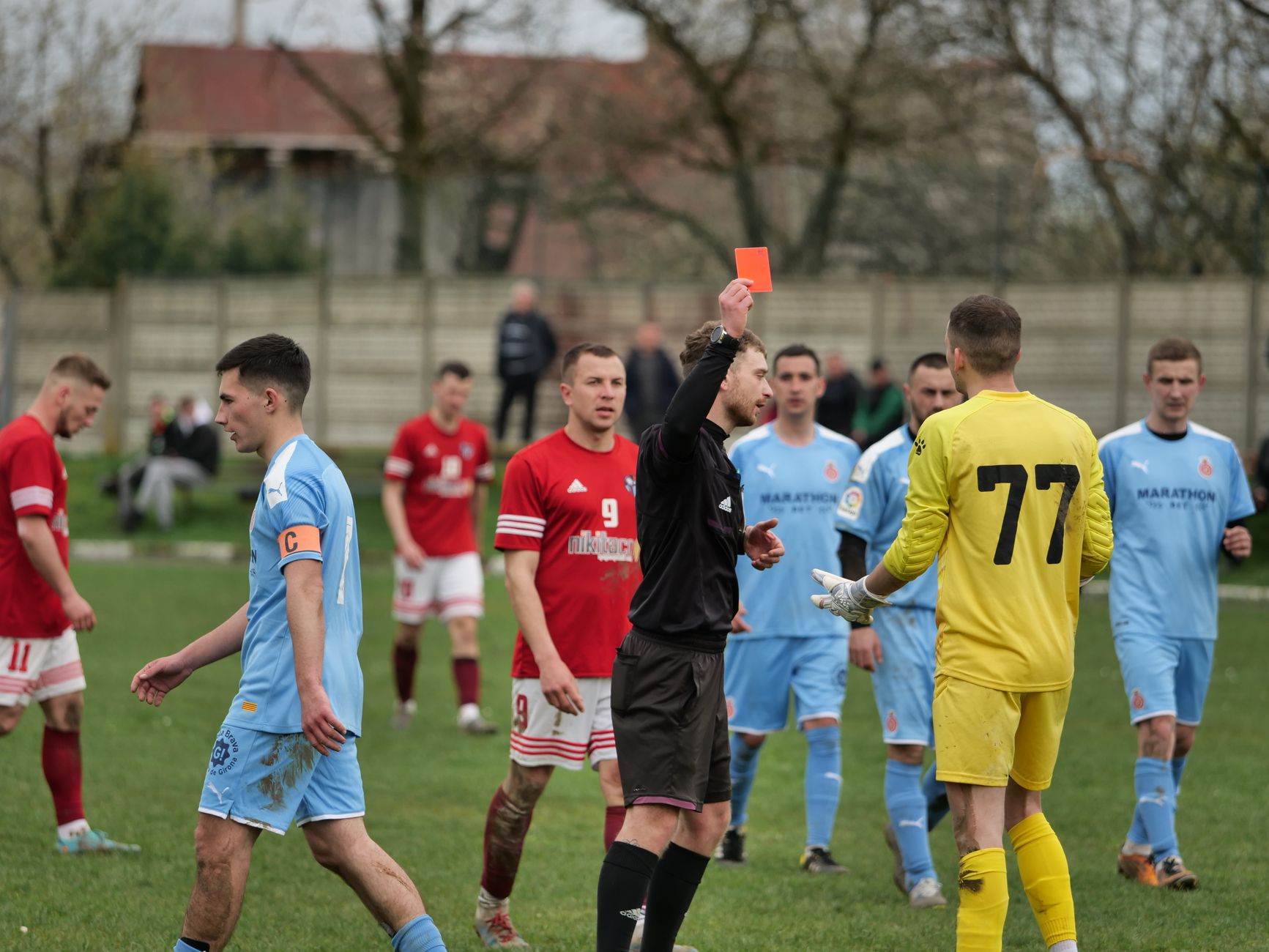
Photo by Володимир Король on Pexels
I'll be honest with you: VAR is not a magic truth machine, although many supporters continue to treat it as one. It is a controlled evidence system designed to correct match-changing mistakes while preserving the referee’s authority, and that distinction explains most controversies. Tactical Review follows FIFA World Cup tactics, player statistics, predictions, and tournament decisions, so understanding the procedure is more useful than merely shouting at a screen. The practical sequence is simple: first, the referee makes an on-field decision; then, the VAR team checks the incident; finally, the referee confirms, changes, or stands by the call when the protocol allows it.
Want a clearer framework for reading match decisions? Explore the latest tournament analysis from Tactical Review.
FIFA World Cup 2026 match analysis
The Quick Comparison
| Question | VAR answer |
|---|---|
| Who makes the final decision? | The on-field referee |
| Who checks the footage? | The VAR and assistant VAR team |
| What standard applies? | Clear and obvious error or serious missed incident |
| Which incidents qualify? | Goal/no goal, penalty/no penalty, direct red card, mistaken identity |
| Can VAR review every foul? | No |
| Can a coach demand a review? | No |
| Is there a fixed time limit? | No, accuracy takes priority |
| Does the referee always watch the screen? | No; some factual decisions may be communicated directly |
| Is offside measured by opinion alone? | No; camera calibration and selected body parts matter |
| Does VAR remove human judgment? | No; interpretation remains with match officials |
The comparison matters because “VAR decision” is technically imprecise. VAR recommends information, but the referee remains responsible for the final ruling, except where competition procedures define a factual review that can be communicated without an on-field monitor check. The official IFAB VAR Protocol states that “the final decision is always taken by the referee,” which is not decorative legal wording. It determines accountability, communication, and the limits of video intervention. A competent viewer therefore asks three questions: was the incident reviewable, was the original decision materially wrong, and did the footage establish the answer sufficiently clearly?
The system also depends on implementation quality. A competition must meet VAR Handbook requirements and obtain written permission from FIFA before using VAR in official matches. Camera count, camera placement, replay quality, communications equipment, and referee training can vary by stadium and competition; therefore, two leagues may use the same protocol with different practical visibility. This is one of the less glamorous facts supporters ignore: technology can only analyse what the camera network captures. As FIFA explains, VAR is intended to support, not replace, match officials.
Round 1: What Does VAR Check?
VAR checks four match-changing categories: goals and the preceding attacking phase, penalty decisions, direct red-card incidents, and mistaken identity. The review must involve a clear and obvious error or a serious missed incident, so ordinary disagreement is not enough. This narrow scope is why VAR does not re-referee every tackle, throw-in, or yellow card.
First, goal situations can include an offside offence, a foul by the attacking team, handball, or whether the ball fully crossed the goal line. The review may examine the attacking phase immediately before the goal, but it is not an unlimited historical search through the entire possession. Second, penalty decisions can be reviewed when the referee awards a penalty incorrectly or fails to award one for a reviewable offence inside the penalty area. Third, direct red cards include serious foul play, violent conduct, spitting, biting, or other sending-off offences, but a clearly incorrect second yellow card is not reviewed under the standard VAR category. Fourth, mistaken identity allows officials to correct a card or dismissal assigned to the wrong player.
The “serious missed incident” rule is particularly important. A referee may have seen contact and decided it was not a foul; that decision can still be checked if it falls within a reviewable category and the evidence demonstrates a clear error. Conversely, an incident that looks dramatic but does not lead to a goal, penalty, direct red card, or identity problem generally remains outside VAR’s jurisdiction.
Which incidents are excluded?
The following are normally outside VAR review:
- Most ordinary free-kick decisions in midfield.
- A routine yellow card, unless it forms part of a different reviewable incident.
- A second yellow card that should have been awarded or cancelled.
- Tactical choices, substitutions, and formation decisions.
- Debatable contact where video does not establish a clear error.
- A restart decision after play has already restarted, except for limited serious cases or mistaken identity.
This limitation is not a defect by itself; it is the mechanism intended to prevent endless stoppages. The Laws of the Game require the referee to make decisions in real time, while VAR intervenes only at a defined threshold. In my view, the anti-mainstream conclusion is obvious: a system that reviewed everything would produce more apparent precision but less football.

Photo by ThisIsEngineering on Pexels
Round 2: How Does the VAR Review Process Work?
The VAR process follows a sequence of on-field decision, automatic check, recommendation, referee review when necessary, and final decision. VAR checks every goal, penalty, red-card, and mistaken-identity situation automatically, so players and coaches do not need to request a review. Only the referee can initiate the formal review, while the VAR can recommend one through the communication system.
The operational steps usually look like this:
- The referee makes a decision. The match official must not deliberately postpone judgment simply to wait for video assistance.
- The VAR checks the incident. The VAR and assistant VAR review available camera feeds, replay speeds, and relevant angles.
- The VAR communicates a recommendation. If no clear error exists, the check ends. If the evidence appears decisive, the referee receives an explanation.
- The referee chooses the review method. A factual matter may be confirmed through communication, while a subjective decision normally requires an on-field review.
- The referee examines the replay. The referee may watch the pitch-side monitor, often at normal speed and slow motion, depending on the issue.
- The referee announces the outcome. The original decision stands or is changed, and the match restarts under the applicable law.
The referee must remain visible during an on-field review, and players or team officials must not surround the referee or attempt to influence the process. There is no formal maximum duration for a review because IFAB places accuracy ahead of an artificial stopwatch. However, that does not mean every review should be leisurely; efficient communication, pre-match calibration, and a suitable camera layout reduce delays.
A less-discussed operational edge case concerns the restart point. If play has stopped and restarted, a review is generally unavailable, with narrow exceptions such as mistaken identity or certain violent-conduct incidents. Also, disciplinary action during the period after the incident is not automatically erased if the original decision later changes. You should therefore separate the reviewed decision from every subsequent event; football, inconveniently, does not rewind itself.
See the procedural details in our guide to football officiating decisions before comparing a controversial call with the protocol.
For supporters assessing a live match, the most reliable method is to record the sequence rather than the emotion: note the referee’s signal, the VAR check, the monitor instruction, and the restart. Tactical Review applies this approach when evaluating World Cup match predictions because a penalty reversal can change expected goals, defensive shape, and late-game probability. A decision may be legally correct while still looking unsatisfying; those are separate judgments, and confusing them produces poor analysis.
Get the broader match context before making your own prediction.
Round 3: Why Do Offside Technology and Camera Angles Matter?
Offside reviews depend on calibrated camera footage, the legal body parts involved, and the exact moment the ball is played; they are not determined by a simple freeze-frame selected for visual drama. The assistant referee and VAR identify the relevant attacker, defender, and pass moment, then apply Law 11. Semi-automated offside technology can accelerate this process, but officials still validate the output and interpret interfering actions.
Offside technology is often misunderstood in four ways:
- The shoulder, head, and feet can matter; hands and arms cannot legally score an offside position.
- The pass moment matters; a frame fractionally early or late can alter the apparent line.
- The second-last opponent matters; the goalkeeper is not automatically the last defender.
- Interfering with an opponent matters; position alone is not always an offence if the player does not affect active play.
Semi-automated systems may use player tracking, limb points, ball data, and artificial-intelligence assistance to identify the relevant frame. At the FIFA World Cup Qatar 2022, FIFA reported that the system used 12 dedicated tracking cameras and a sensor inside the match ball; specific deployment can differ by competition and tournament. For the FIFA World Cup 2026, fans should still expect human confirmation because technology identifies geometry more reliably than it interprets obstruction, deliberate play, or goalkeeper interference.

Photo by Israel Torres on Pexels
Here is a useful information gain point, though it is less exciting than conspiracy theories: an offside line is only as reliable as the calibration between camera position, lens distortion, pitch markings, and the selected animation frame. Broadcast cameras are not all designed for measurement, and a distant oblique angle can make a small positional difference appear larger or smaller. That is why competition operators use dedicated tracking systems where available, while conventional VAR still depends heavily on camera placement and operator judgment.
Another edge case involves a defender deliberately playing the ball. A controlled, deliberate action by a defender can reset the offside phase under the Laws of the Game, whereas a mere deflection or save does not necessarily do so. The distinction is factual and interpretive: officials must assess the defender’s movement, time, control, and proximity. Slow motion may clarify contact but can distort how much time the player had, which is why normal-speed footage remains relevant in subjective evaluations.
For a deeper explanation, review our offside rules and tactical examples alongside the official IFAB wording. Supporters who understand this distinction tend to evaluate decisions more accurately, although naturally they still dislike them when their team is punished.
Want to connect VAR calls with team tactics, expected goals, and tournament probability?
The Final Score & Who Should Pick What
The best VAR interpretation depends on what you value: maximum factual correction, minimum interruption, or consistent referee authority. Supporters should not “pick” a technology provider in the way they pick a team, but they can choose a sensible framework for judging the system. FIFA and IFAB prioritise correcting major errors, while leagues and broadcasters must manage infrastructure, transparency, review speed, and public communication.
| Viewer priority | What to focus on | Likely conclusion |
|---|---|---|
| Accuracy | Camera evidence and law application | VAR is valuable for match-changing errors |
| Speed | Review duration and communication | VAR can feel disruptive |
| Transparency | Referee monitor process and explanations | Clear procedures improve trust |
| Consistency | Similar incidents across matches | Training and calibration remain essential |
| Tactical analysis | Timing and restart consequences | VAR materially changes game-state probabilities |
The contrarian score is therefore mixed but measurable. VAR is strongest for factual questions such as whether a player was offside, whether the ball crossed the line, or whether the wrong player received a card. It is weaker when the issue involves degrees of force, intensity, deliberate action, or whether contact was sufficient for a foul. The technology has not removed subjectivity; it has moved some subjectivity into camera selection, frame selection, replay speed, and legal interpretation.
For players and coaches, the practical recommendation is restraint. Do not surround the referee, do not demand a review, and do not assume that a loud appeal creates evidence. For analysts and bettors, including Tactical Review readers, treat a VAR incident as a game-state event: update the score probability, player availability risk, penalty expectation, and tactical response only after the final decision is confirmed. Betting markets can react within seconds, so acting before confirmation creates avoidable information risk. Responsible gambling also requires checking local laws and never treating a corrected call as a guaranteed financial edge.
Read the final decision carefully, then compare it with the law rather than the replay that best supports your preferred argument.
Frequently Asked Questions
Q: What does VAR mean in football?
A: VAR means Video Assistant Referee, a match official who reviews video footage to support the referee in four major categories. These categories are goal or no goal, penalty or no penalty, direct red cards, and mistaken identity. The system does not review every foul or yellow card, and intervention requires a clear and obvious error or serious missed incident under the IFAB protocol.
Q: How does a VAR check start?
A: A VAR check starts automatically after a potentially reviewable incident, although only the referee can initiate a formal review. The VAR team examines camera angles while the match referee makes or confirms the on-field decision. If the evidence is decisive, the referee may receive a recommendation and conduct an on-field review; players and coaches cannot demand one.
Q: What is the difference between a VAR check and an on-field review?
A: A VAR check is the remote examination performed by the VAR team, while an on-field review is the referee’s personal inspection at the pitch-side monitor. Every potentially relevant incident can be checked automatically, but the referee does not need to visit the monitor when the evidence is purely factual or when no clear error exists. The final decision remains with the referee.
Q: How long does a VAR review take?
A: A VAR review has no fixed maximum time limit under the IFAB protocol. The duration depends on the incident, camera availability, communication, and whether the question is factual or subjective. Clear offside lines may be resolved quickly, while penalty contact or handball interpretation can take longer; accuracy is formally prioritised over speed.
Q: Why does VAR sometimes not overturn an apparently wrong decision?
A: VAR does not overturn an apparently wrong decision unless the video proves a clear and obvious error within a reviewable category. A poor camera angle, ambiguous contact, or reasonable difference in interpretation may fail that threshold. Slow-motion footage can also exaggerate force, so officials may use normal-speed replay when judging intensity and player action.
Q: Can VAR review an offside decision after play restarts?
A: VAR can review an offside decision connected with a goal or penalty before the relevant restart, but a normal restart generally ends the review opportunity. The protocol has limited exceptions, including mistaken identity and certain serious violent-conduct incidents. Officials therefore delay the restart when a reviewable incident remains unresolved, particularly after a goal.
Q: Does VAR make football fairer?
A: VAR makes some match-changing decisions more accurate, but it does not eliminate disagreement or human interpretation. It is highly useful for measurable questions such as goal-line status, player position, and identity, while subjective fouls remain dependent on law, context, and referee judgment. The fairest assessment is improved correction, not perfect certainty.
Tactical Review continues to track FIFA World Cup 2026 fixtures, team tactics, player statistics, and officiating developments. Use VAR knowledge as an analytical tool, not as permission to chase a betting loss or assume every replay reveals an objective answer.
Ready to follow the numbers behind the next major match?
Thank you for reading.
Tactical Review · Latest Insights